In Bangladesh

The Genocidal Blueprint

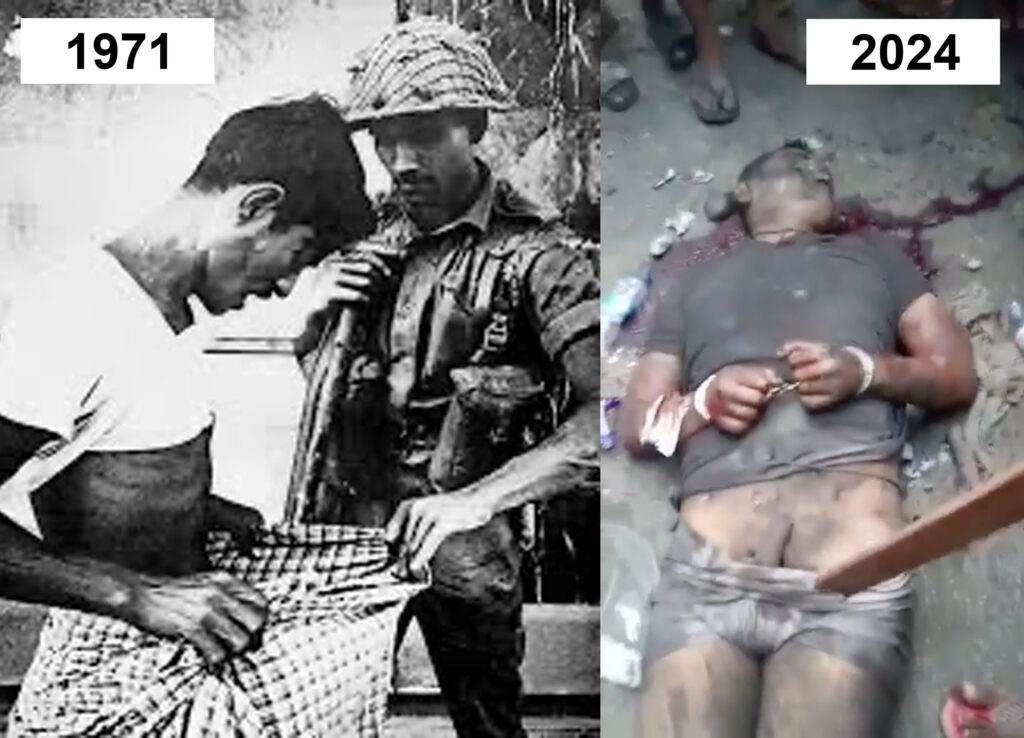
The acts of violence against Hindus in Bangladesh bear the hallmarks of genocide as defined by international law. According to the United Nations Convention on the Prevention and Punishment of the Crime of Genocide (1948), genocide includes “acts committed with intent to destroy, in whole or in part, a national, ethnical, racial or religious group.” The targeted violence against the Hindu community—including mass rapes, killings, and the destruction of cultural and religious heritage—fits this definition with chilling precision. The root of this violence lies in the rise of Islamic extremism and hatred, which has been systematically fueling these atrocities. Extremist ideologies have taken hold in certain segments of society, leading to the radicalization of individuals and groups who perpetrate these heinous acts. This religiously motivated violence aims to drive out or eliminate the Hindu minority, furthering the extremist agenda of creating a homogenized, monolithic state. It is imperative that this extremism is checked, and that the broader international community speaks out against these acts of barbarism. The recent attacks on prominent figures and religious leaders reveal a calculated effort to erase the Hindu presence in Bangladesh. The international media is silent on this issue, one needs to question why this horror is not covered and denounced by leading media channels internationally. The world has witnessed genocides before, and history has shown us the catastrophic consequences of ignoring such warning signs. Yet, the international community remains largely silent, allowing the perpetrators to continue their campaign of terror with impunity.

The 1971 Hindu Genocide

The 1971 Hindu Genocide in Bangladesh stands as one of the most brutal and horrifying episodes of religious persecution in South Asian history, with 2.4 million Hindus killed and over 200,000 women raped.

Hindus were disproportionately targeted for their faith, facing mass killings, rape, abduction, and forced conversions. The mobs were encouraged by local militia and engaged in horrific atrocities including the destruction of Hindu temples, the mass slaughter of entire villages, and the displacement of millions.

Over 200,000 women, most of them Hindu, were raped during the conflict, Many families were separated, homes were looted or destroyed, and Hindu businesses were targeted for ruin. 

The genocide decimated the Hindu population in what was then East Pakistan (now Bangladesh) reducing the Hindu population from 20% to 8%. Even decades later, the impact of this genocide remains a deeply painful issue in the region.

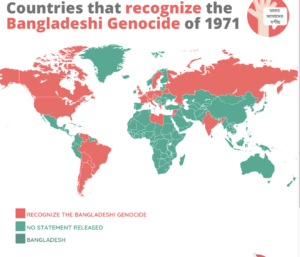
Several International Organizations and bodies have recognized the 1971  Bangladesh genocide, particularly the targeted atrocities against the Hindu population:


1)      Genocide Watch: This organization has recognized the 1971 atrocities in Bangladesh as genocide, highlighting the systematic targeting of Bengali Hindus by the Pakistani military.
 

2)      Lemkin Institute for Genocide Prevention: The Lemkin Institute has acknowledged the genocide against the Bengali Hindu population during the 1971 Bangladesh Liberation War.
 

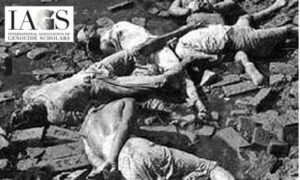
3)      International Association of Genocide Scholars (IAGS): On March 25, 2023, the IAGS adopted a resolution recognizing the genocide committed by the Pakistani military during the Bangladesh Liberation War in 1971, which included targeted attacks against the Hindu community.
 

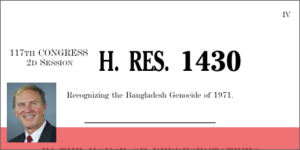
4)      United States House of Representatives: In October 2022, a resolution (H.Res.1430) was introduced to recognize the Bangladesh Genocide of 1971, detailing the mass atrocities committed, including those against the Hindu population.
Feb 9 DC Congressional Briefing